
Our family’s summer vacation began with a road trip to Coorg, timed perfectly with the end of my daughter’s school year. She’s always loved Coorg’s cooler climate and rope activities making it an ideal destination for our getaway.
This visit was special—we arrived during the coffee flowering season, something we hadn’t experienced in our previous trips. Rather than rushing between tourist attractions, we focused on immersing ourselves in the region’s tranquility and the facilities at the resort. The lush green landscapes provided a welcome contrast to Bangalore’s busy traffic.
The fragrance of coffee blossoms filled the air as we spent our days simply enjoying the peaceful surroundings, creating memories in this serene hill station.
The Journey
The drive from Bangalore to Coorg took approximately 7 hours. We started our day early, leaving home at 7:30 AM and picking up my parents by 8:15 AM. Our route took us via Mysore, though we didn’t enter the city itself, instead taking the direct road to Coorg.
Unlike our previous trips where we would traditionally stop for lunch at the Novotel hotel in Mysore, this time we decided to continue straight to our destination. Bangalore’s morning traffic necessitated a breakfast stop in the city before we could reach the highway.
Once on the Bangalore-Mysore highway, the journey became much smoother. The excellent road conditions allowed for comfortable cruising, with most vehicles maintaining speeds under 100 KMPH, though some drivers tested both speed limits and the patience of fellow travelers. We noticed that the number of food and refueling options along the route had increased significantly in recent months.
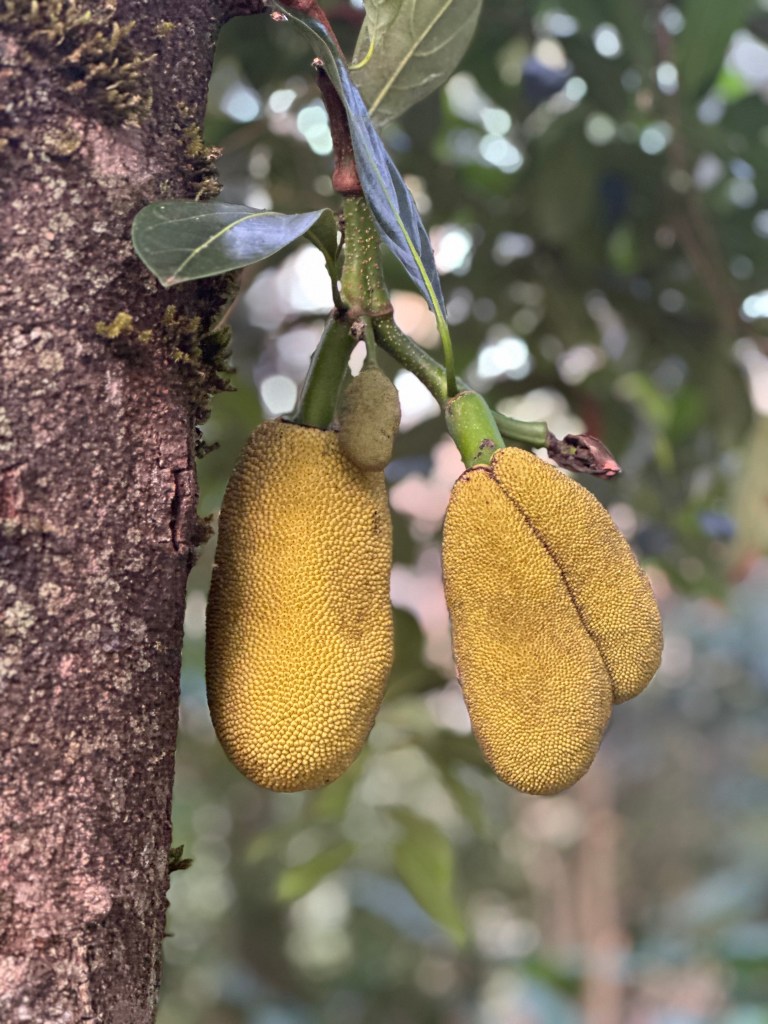
We drove non-stop on the highway stretch, but after passing Mysore and heading toward Coorg, we needed a break. We stopped at McDonald’s for burgers and coffee, which gave us the energy to continue. The road quality from Mysore to Coorg wasn’t as good as the highway we had just left. Along this stretch, we made another stop to buy jackfruits – a fruit with a strong smell but delicious taste that’s definitely an acquired preference. This detour provided enough sustenance to complete our journey to Coorg.
We had reservations at the Coorg Marriott Resort and Spa. Following Google Maps’ directions led us through extremely narrow plantation roads during the final stretch. While the scenery was beautiful, we worried about getting stuck. We did encounter a vehicle coming from the opposite direction, but thankfully that driver skillfully reversed to a point where I could maneuver past. I later discovered there were alternative routes available – a lesson that trusting Google Maps isn’t always advisable, especially when it directs a car onto what seems like a bike path. Perhaps someday navigation systems will better differentiate between vehicle types!
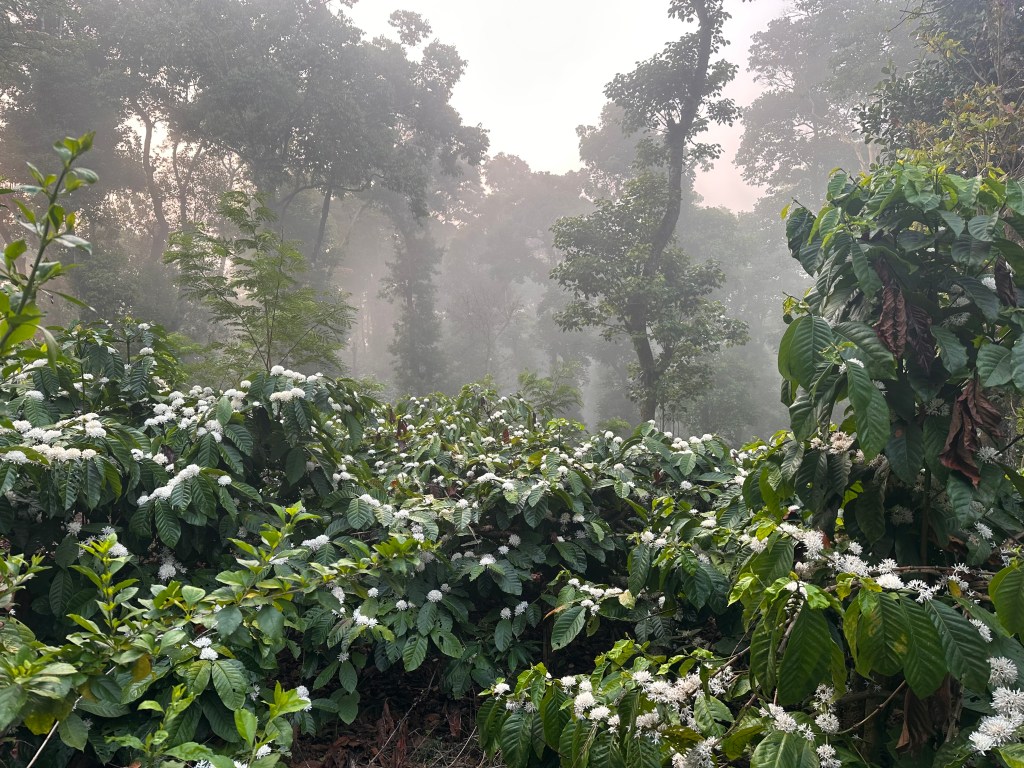
Once we arrived, one of the first things that struck me was the unique aroma in the air — a jasmine-like scent coming from the coffee flowers. We were lucky enough to visit during the coffee blooming season, and the sight of coffee plants with tall, flower-covered stems was nothing short of mesmerizing.
Coffe @ Coorg
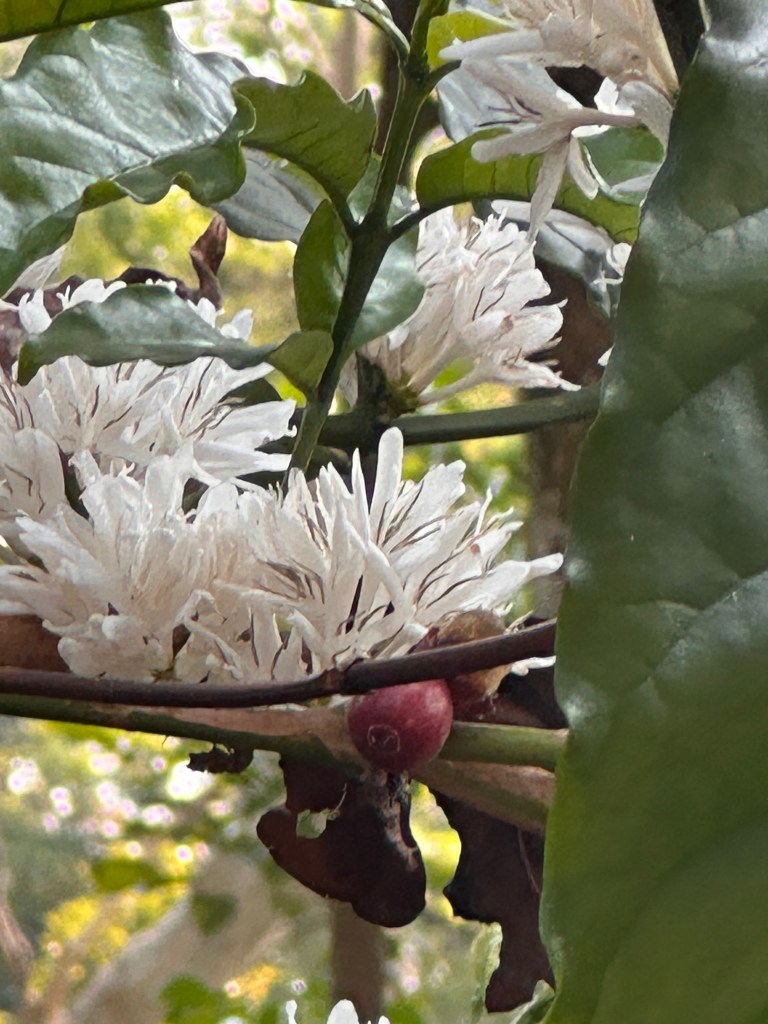

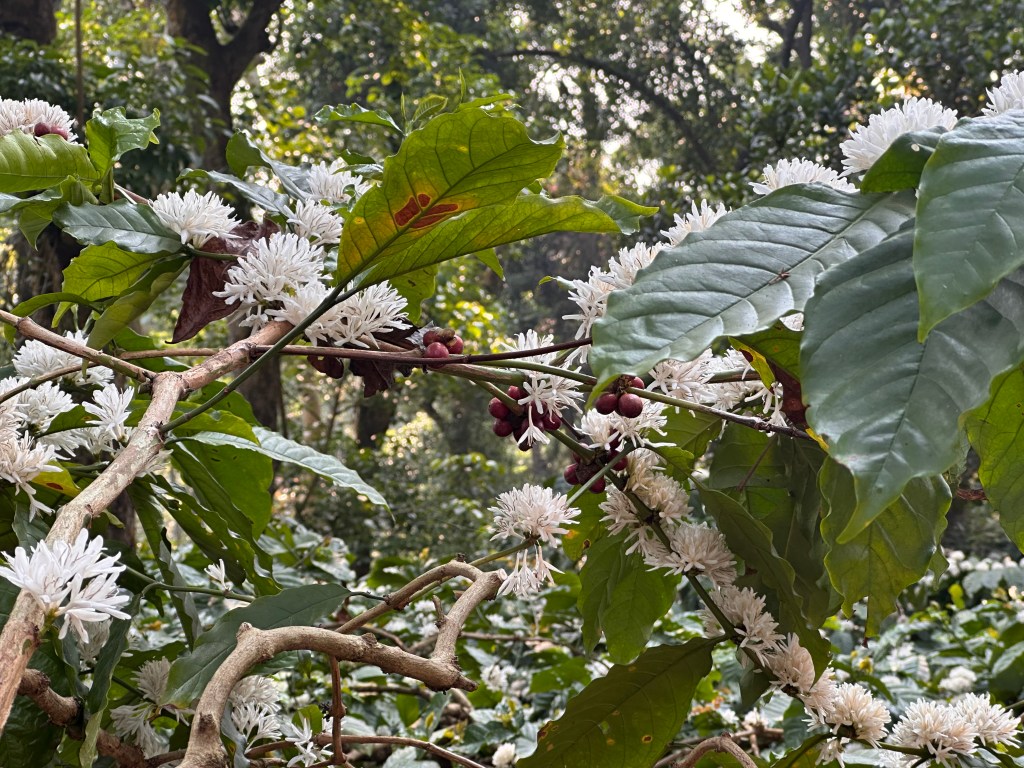


Coorg is renowned for its coffee, cultivating both Robusta and Arabica varieties. Each bean type offers distinct characteristics:
Robusta lives up to its name with a stronger, more robust profile. It delivers bitter notes with earthy or woody aftertastes and possesses a fuller body. Robusta contains higher caffeine levels than Arabica but has lower acidity, sugar, and oil content.
Arabica produces a lighter-bodied coffee with sweeter, floral flavors.
Most coffee brands blend these varieties in different ratios. Traditional South Indian coffee typically contains 70% Robusta and 30% Arabica. Premium cappuccinos, such as those served at Third Wave Coffee, generally use mostly Arabica beans as they complement milk better. While Robusta plants have larger leaves than Arabica, their beans are actually smaller.
The local coffee possesses a unique flavor profile influenced by Coorg’s rainforest environment. I was intrigued to learn about the region’s traditional practice of growing coffee under trees, unlike the open-field plantations found elsewhere. This canopy provides essential shade and protection for the coffee plants, allowing them to thrive harmoniously with their surroundings. Since coffee plants still require sunlight, farmers strategically trim the taller trees to allow filtered light to reach the coffee bushes below.
Coorg coffee plants follow a deliberate growth timeline before reaching their productive potential. Farmers must be patient, as the first yields only appear after 2-3 years of planting. Full production capacity isn’t achieved until the plant reaches 5-7 years of age.
These plants are remarkably long-lived, with most coffee plants in Coorg surviving well beyond 50 years. Under ideal conditions, some even reach 80 years of age while still producing coffee cherries.
Plantation management requires ongoing attention. Farmers regularly remove volunteer seedlings that sprout from fallen seeds to maintain proper spacing and organization within the plantation. Trimming is an essential practice that improves overall yield, reduces excessive foliage, promotes lateral branching where coffee cherries develop, and creates more accessible plants for efficient harvesting.
This careful cultivation process contributes to Coorg’s reputation for high-quality coffee production. Generations of farmers have refined these management techniques over decades.
Coffee flowers are one of Coorg’s seasonal treasures, appearing typically once a year. The blossoms are small, white, star-shaped flowers that cluster along coffee branches, resembling jasmine in appearance. Their fragrance is exceptionally sweet and delicate – often described as a blend of jasmine, orange blossom, and honey with subtle vanilla undertones. The flowering period is brief but memorable, lasting only 2-3 weeks. In Coorg, this typically occurs between February and April, depending on weather conditions and the timing of the first pre-monsoon showers. The scent is most intense in the early morning when the flowers release their fragrance in waves that can carry for surprising distances. About 6-9 months after flowering, these blossoms will develop into the coffee cherries that contain the beans.
Beyond coffee, Coorg is a treasure trove of spices. A highlight of my visit was exploring local ingredients like pepper, which is extensively cultivated in the region. Coorgi pepper stands out for its exceptionally robust flavor, making it distinctive.
A Relaxing Stay


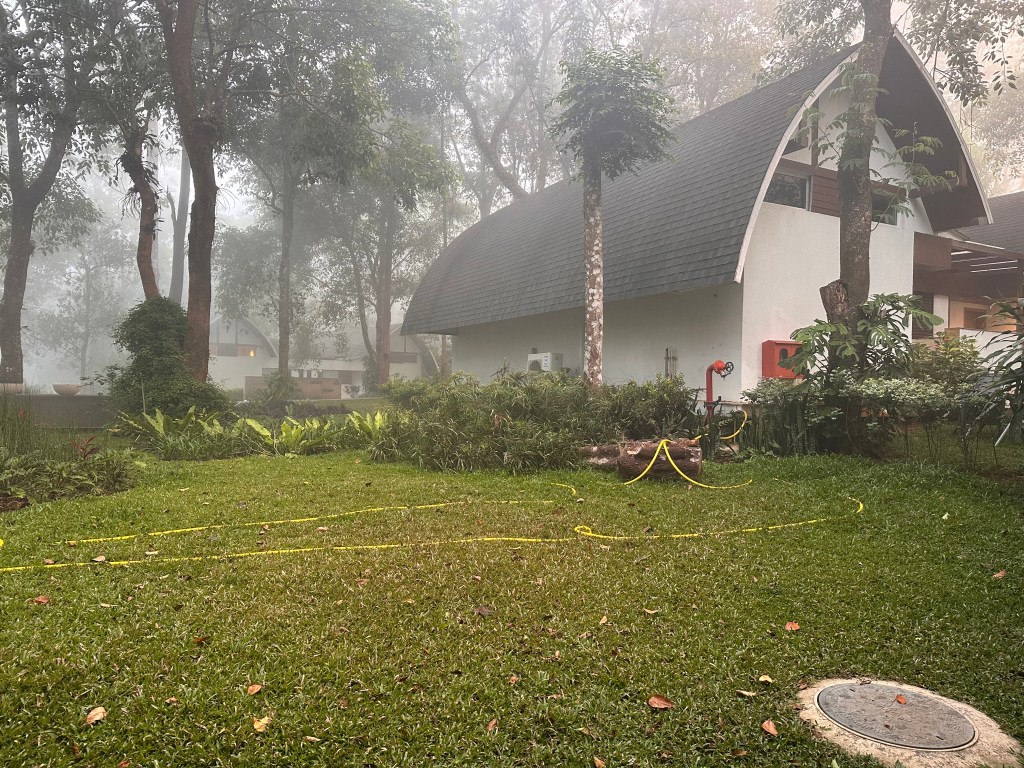

Our accommodation at the Marriott Resort & Spa in Coorg exceeded expectations. We chose a plantation villa that provided the perfect retreat after our long journey. The comfortable beds ensured restful nights, while the spacious balcony offered an ideal setting for morning meditation overlooking the lush plantation landscape.
The resort’s well-maintained pathways provided excellent routes for our morning walks, allowing us to explore the property while enjoying the crisp Coorg air. The bathrooms were impressively large—luxuriously so—with high-end fixtures and amenities that enhanced our comfort.
Situated in the heart of Coorg, the resort struck a perfect balance between luxury and natural beauty. We made the most of our stay by exploring the scenic surroundings, indulging in the resort’s delicious cuisine, and spending leisurely hours by the inviting swimming pool. Taking refreshing dips in the pool became a daily highlight, offering welcome relaxation amid Coorg’s serene environment.
Coorg—Where Peace Comes with a Side of Coffee
Our trip to Coorg wasn’t about frantically checking tourist attractions off a list. Instead, we embraced the simple pleasures: savoring great food, enjoying the natural surroundings, and spending quality time with family without the usual distractions.
Coorg’s coffee was a genuine highlight. Rich with distinctive local character, it made our morning cups special. The regional spices added unexpected depth to every meal, while the fresh fruits offered sweet rewards after our relaxing walks through the plantations.
The resort provided just the right atmosphere—a place where we could truly disconnect and find that elusive sense of calm that seems to evaporate in our daily lives. The days unfolded gentler, measured in conversations and quiet moments rather than schedules and obligations.
Coorg delivers beautifully if you’re seeking a getaway where crowds are scarce, and nature takes center stage. It’s the kind of place where you can finally exhale completely and remember what relaxation actually feels like—something increasingly rare in our hyperconnected world.

 Digital Journey