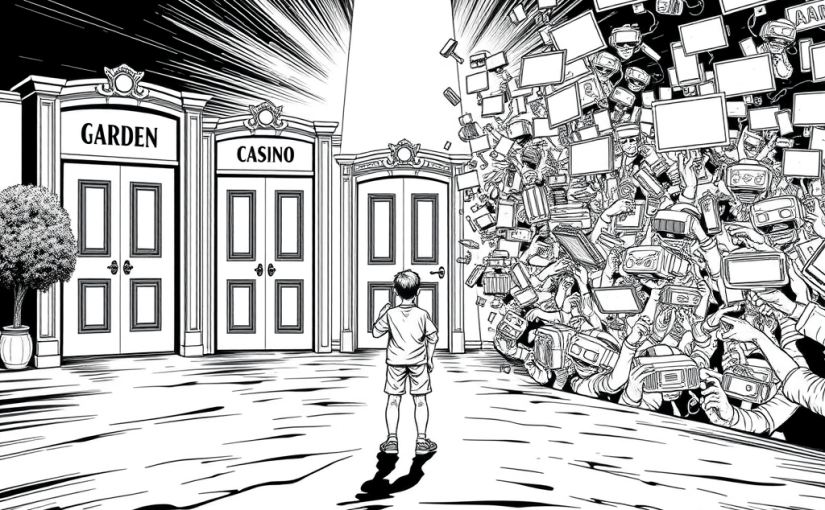
A story about how the machines stole every job on the planet. Then, humanity finally figured out what it was actually worth.
The Crime Scene
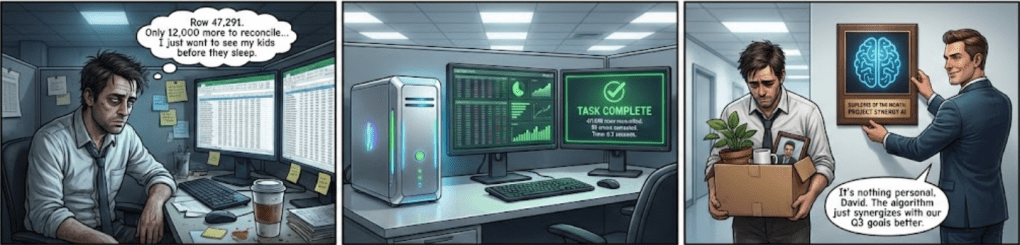
Here’s the thing about the biggest heist in history — nobody called the cops. Nobody even noticed it was happening. One day, you’re grinding your 9-to-5, bragging about your “hustle,” posting your sad desk lunch on Instagram. The next day, a bot does your entire week’s work during its lunch break. Except bots don’t take lunch breaks. That’s the whole problem.
They didn’t come with guns. They came in as helpful assistants.
AGI (Artificial General Intelligence) and ASI (Artificial Super Intelligence) rolled into civilization as the best cons always do. It was smiling and helpful, solving your problems and making your life easier. And by the time you looked up from your phone, it had taken everything. Your spreadsheets. Your diagnoses. Your legal briefs. Your music. Your art. Even that one thing you thought made you special at work — yeah, that too. Gone. Automated. Running on a server farm in Iceland that doesn’t even know your name.
The cops weren’t coming because there was no crime. Not technically. The machines didn’t steal your job. They just made it worthless. Which, if you think about it, is way more violent.
So here we are. Seven billion suspects. No victims willing to testify. And one big, ugly question spray-painted on the wall of the 21st century:
If the bots do everything, what’s your alibi for being alive?
The Alibis We Used to Hide Behind
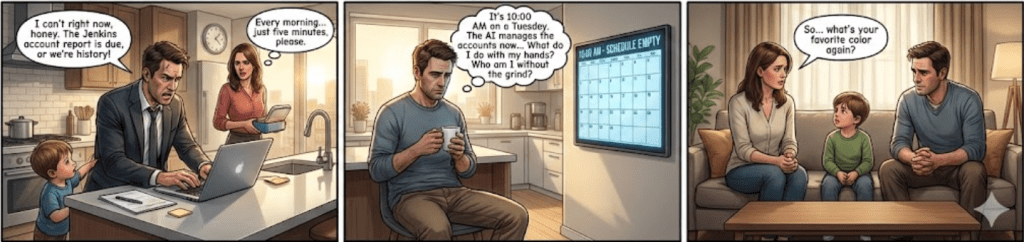
See, for generations, we had the perfect cover story. “I’m busy.” That was the alibi. You dodge your kids. You ghost your parents. You ignore your mental health and avoid every hard conversation in your life. Nobody questioned it because you were productive. Busy was the getaway car, bestie.
Your boss needed you. Your company needed you. The economy needed you. You were a cog, sure, but a necessary cog. And that necessity? That was identity. That was the purpose. That was the thing you whispered to yourself at 2 AM when nothing else made sense.
Then AGI showed up and shot your alibi dead in a parking lot.
No more “sorry, babe, I have to work late.” The bot did it in forty-five seconds. No more “I’ll spend time with the kids this weekend.” Weekends are here, and your calendar is empty. Has been for months. No more pretending that answering emails is a personality trait.
The busywork alibi is bleeding out on the floor. Now you’re standing in your kitchen at 10 AM on a Tuesday. You stare at your family as if you’re a stranger. You realize you haven’t had a real conversation with your daughter since she was in third grade.
That’s not liberation. That’s a crime scene of a different kind.
The New Black Market — Who’s Selling What
Every heist reshuffles the underground. Old rackets die. New ones open up. And in the Inverse Universe, the most valuable contraband isn’t drugs, data, or diamonds.
It’s being real.
No cap — authenticity becomes the new currency, and the black market for it is wild. Let me walk you through the new economy like I’m walking you through a crime syndicate org chart.
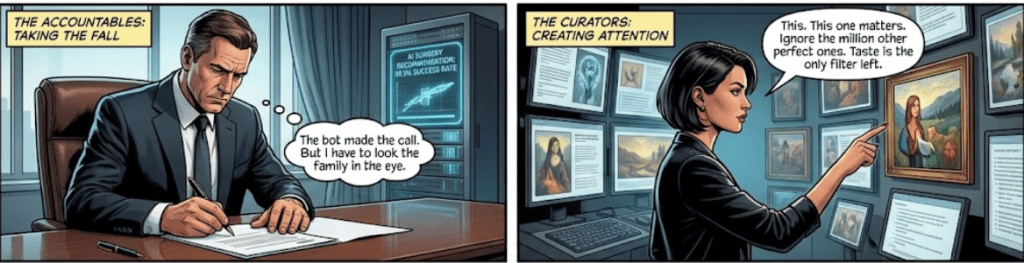
The Accountables — these are the bosses. Not because they’re the smartest. The bots are smarter. These are the people who sign their names. When an AI recommends a surgery, and the patient dies, somebody’s gotta face the family. When an algorithm denies a mortgage to ten thousand people, somebody’s gotta sit in front of Congress. That signature? That willingness to be the one who answers for it? That’s the most expensive thing in the new world. Accountability is the new corner office. A bot can make the call. Only a human can take the fall.
The Curators — think of them as the fences, but for meaning. When AI generates ten thousand songs a minute, someone has to review them. AI creates a million articles an hour. Infinite content emerges in every direction. Somebody’s gotta look at all of it. They must say, “This.” This one matters. Ignore the rest. That’s not an algorithm. That’s taste. And taste, in a world drowning in content, is worth more than the content itself. The curator doesn’t create the art. They create the attention. And attention, my friend, is the last scarce thing on earth.
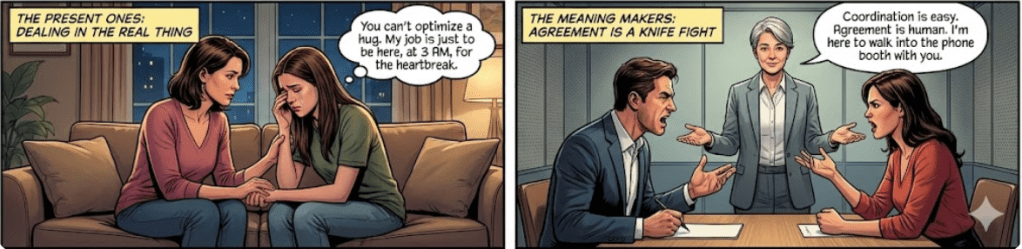
The Present Ones — the caregivers, the teachers, the coaches, and the nurses. They are the parents who actually sit down and look their kids in the eye. These aren’t tasks. You can’t optimize a hug. You can’t automate the 3 AM conversation with your teenager who just got their heart broken. Bots can simulate empathy the way a con artist simulates love — convincingly, until it matters. The Present Ones deal in the real thing, and the real thing has a street value that keeps going up.
The Meaning Makers — mediators, coaches, community builders, and spiritual guides. They are like the bartender who knows when to talk and when to shut up. Coordination gets easier with bots. But agreement? Agreement is still a knife fight in a phone booth. Someone’s gotta walk into that booth. That’s the Meaning Makers. Conflict resolution is a growth industry because every other friction has been automated except the human kind.
The Labels
In every underground economy, provenance matters. Is this real? Is this stolen? Who touched it last?
The same thing happens in the Inverse Universe, except the labels go on everything.
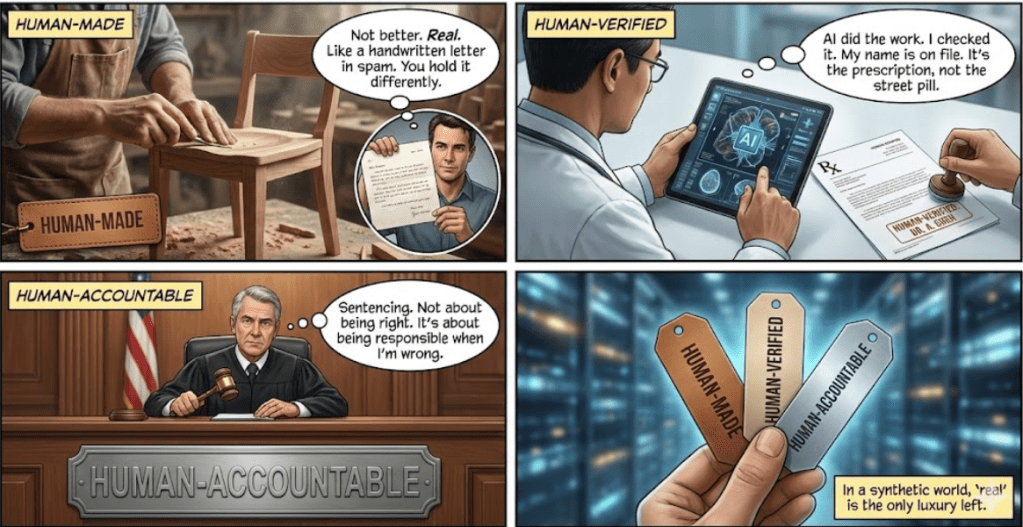
“Human-Made.” That little tag is the new Gucci logo. A poem written by a person. A chair built by hand. A meal cooked by someone who learned the recipe from their grandmother, not from a dataset. It doesn’t have to be better than the AI version. It has to be real. And “real” hits different when everything else is synthetic. Like finding an actual letter in a mailbox full of spam. You hold it differently. You read it more slowly.
“Human-Verified.” This is for high-stakes matters. These include medical results, financial advice, and legal opinions. Anything can wreck your life if it’s wrong. An AI did the work. A human checked it. That human’s name is on file. It’s the difference between a street pill and a prescription from a pharmacy. Same molecule, maybe. But one comes with a receipt and a person you can call.
“Human-Accountable.” The heavy label. Someone’s neck is on the line. Criminal sentencing. Military decisions. End-of-life care. You want a bot making that call? Nah. You want a person. It’s not because they’ll get it right. It’s because they can be held responsible when they don’t. That’s the deal. That’s always been the deal.
The Two Gangs
Here’s where the story splits, and this is where it gets lowkey terrifying.
AGI removes the obstacles. It kills the busywork, frees up the time, and handles the grind. But what do you do with that freedom? That’s on you. And humanity splits into two gangs.
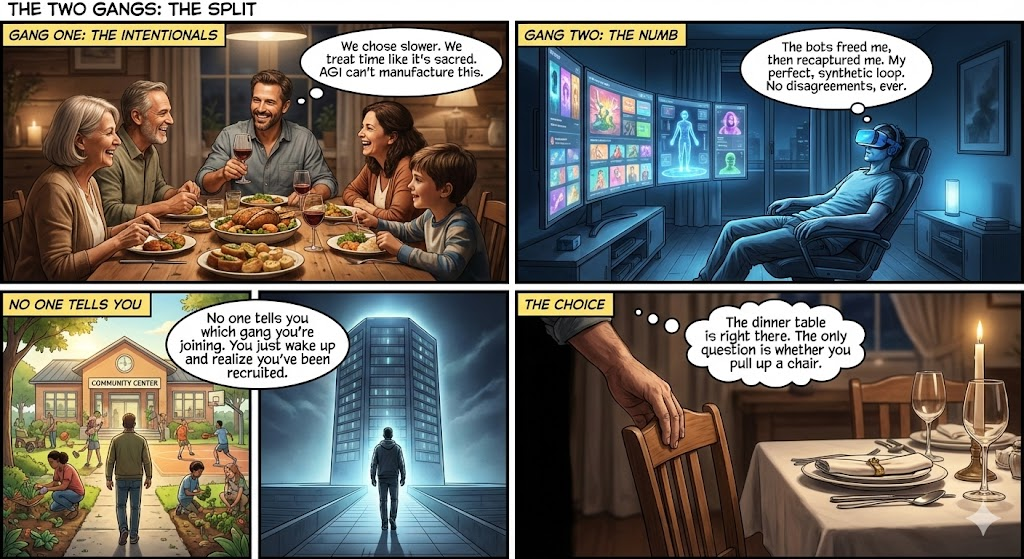
Gang One: The Intentionals. These are the ones who sit down at the dinner table. Who learn to cook slow meals. Who join local clubs, play sports with their neighbors, take the long walk, and have the hard conversation. They build rituals. They raise their kids with presence, not productivity metrics. They’re slower, and they know it, and they chose it. The Intentionals treat their free time like something sacred. They understand that time is the only resource AGI can’t manufacture.
Gang Two: The Numb. These are the ones who fall into the dopamine pipeline. Hyper-personalized entertainment. Synthetic companions who never disagree with you. Feeds that know your psychology better than your therapist and use it to keep you scrolling until your eyes bleed. The Numb aren’t lazy — they’re captured. The same bots that freed them have recaptured them. This is the irony that would make a crime novelist weep.
No one tells you which gang you’re joining. You just wake up one day and realize you’ve been recruited.
The dinner table is right there. It’s always been right there. The question — the only question that matters in the Inverse Universe — is whether you pull up a chair.
The Workplace After the Heist
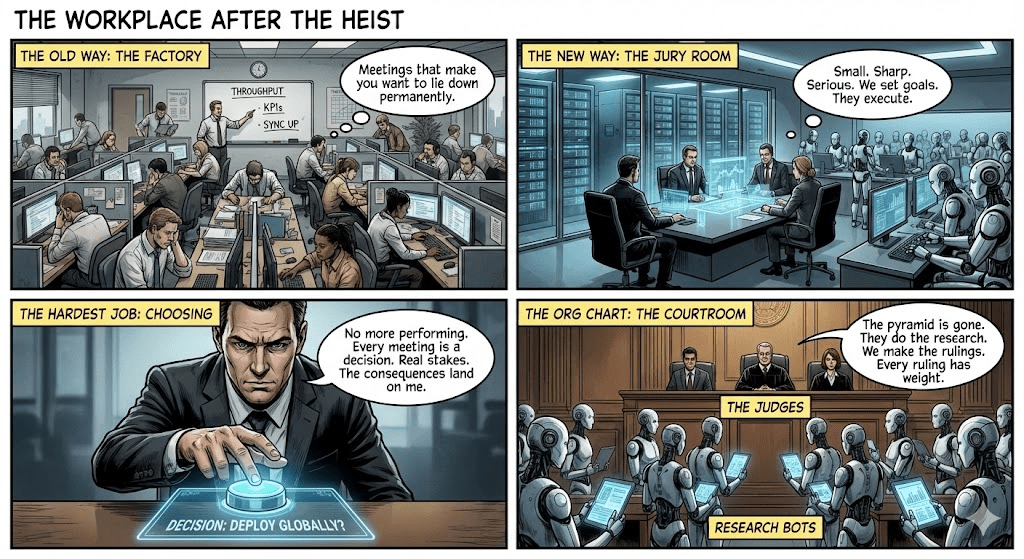
Corporations used to be factories cosplaying as offices. Throughput. Process. KPIs. Stand-ups that made you want to lie down permanently.
Post-heist? The workplace looks like a jury room. Small. Sharp. Serious. A thin crew of humans setting goals, drawing lines, owning consequences. Behind them, a thick army of bots operates. They execute tasks, conduct analyses, and manage operations. This is everything that used to need a building full of people and a parking lot full of sadness.
Meetings get rare but heavy. No more “syncing up,” “circling back,” or whatever performative nonsense fills your calendar. Every meeting is a decision. Every decision has a name attached. You don’t go to work to do things anymore. You go to work to choose things. And choosing is challenging. Real choosing involves real stakes. The consequences land on you. It turns out to be the hardest job humans have ever had.
The org chart doesn’t look like a pyramid anymore. It looks like a courtroom. The bots are the lawyers doing research. The humans are the judges. And every ruling has weight.
School Gets Interesting (Finally)
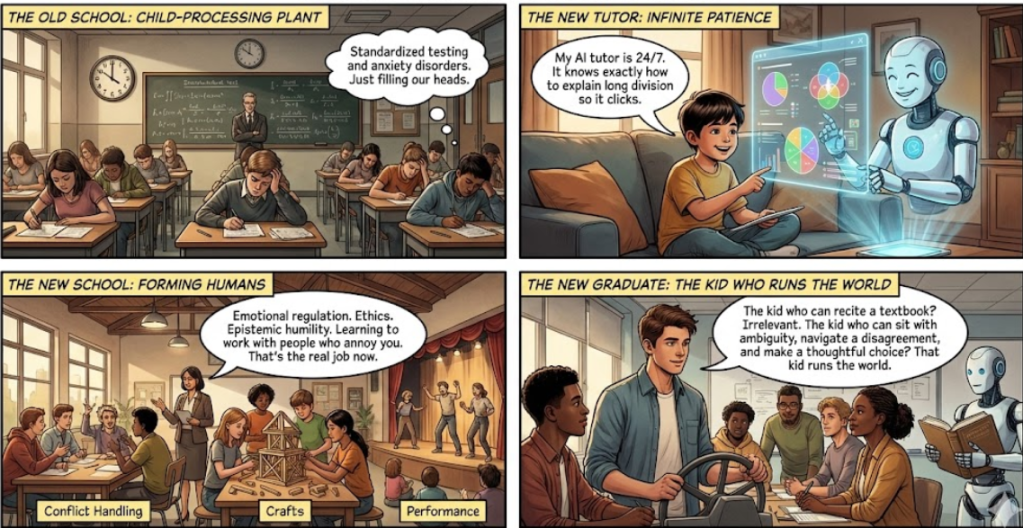
If every kid has an AI tutor that’s infinitely patient and infinitely adaptive, what happens? This tutor is available 24/7 and knows exactly how to explain long division in a way that clicks. Then what’s the school building even for?
Not content delivery. That game is over. The school becomes something different. It returns to what it was intended to be before the industrial era changed it into a child-processing plant. It becomes a place where you learn how to be a person.
Emotional regulation. Conflict handling. Learning to work with people who annoy you is crucial. Let’s be honest, it’s the most valuable life skill nobody teaches. Ethics. Epistemic humility, which is a fancy way of saying “learning to ask ‘how do we actually know this?’ before running your mouth.” Sports. Crafts. Performance. Stuff you can only learn with a body in a room with other bodies.
The kid who can recite a textbook? Irrelevant. The bot has the textbook memorized in every language. The kid who can sit with ambiguity, navigate a disagreement, and make a thoughtful choice under pressure? That kid runs the world.
Education stops being about filling heads and starts being about forming humans. Which is what Socrates was trying to do before we turned it all into standardized testing and anxiety disorders.
The Three Endings
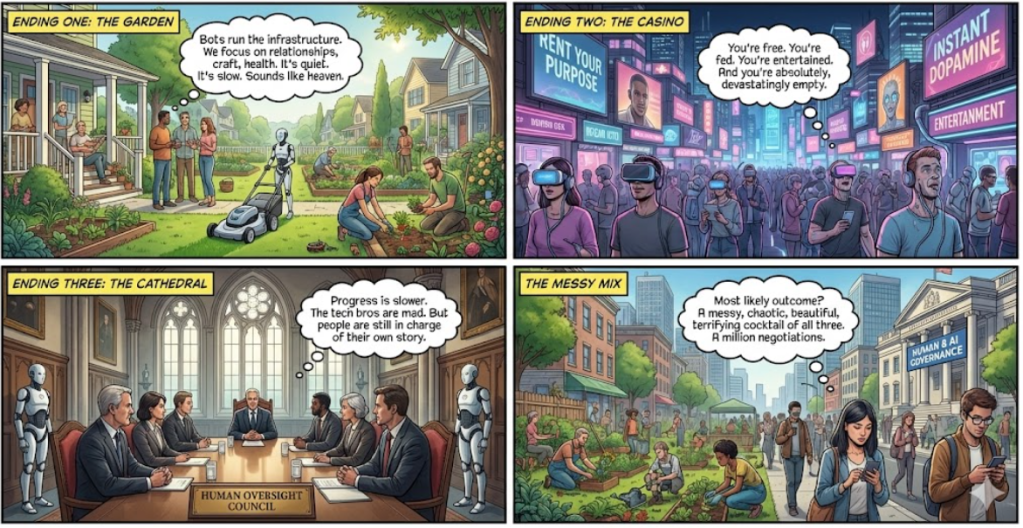
Every crime novel gives you possible endings. Here are yours.
Ending One: The Garden. The bots run the infrastructure. Humans focus on relationships, craft, health, civic life, and exploration (my favorite). Inequality gets managed. Accountability norms hold. It’s quiet. It’s slow. People know their neighbors’ names. It’s not exciting, but it’s real. Picture a well-funded small town. Robots mow the lawns. Humans sit on the porch and argue about philosophy. Sounds boring. Sounds like heaven.
Ending Two: The Casino. The bots create abundance, but the attention markets eat people alive. Entertainment and persuasion become the only industries that matter. A small elite owns the bots. Everyone else rents meaning by the month, like a streaming subscription for a purpose. Think Vegas, but everywhere, and the house always wins because the house has a super-intelligence running the odds. You’re free. You’re fed. You’re entertained. And you’re absolutely, devastatingly empty.
Ending Three: The Cathedral. Strong institutions put hard limits on bot autonomy. Humans get paid to be stewards — ethics, oversight, care, governance. Progress is slower. The tech bros are mad about it. But legitimacy holds. Society moves at the speed of human deliberation, not machine computation. Something important is preserved — the sense that people are still in charge of their own story.
Most likely outcome? A messy, chaotic, beautiful, terrifying cocktail of all three. Different in every city, every country, every household. The Inverse Universe isn’t one world. It’s a million negotiations happening concurrently.
The Closing Statement
I’ll keep it short because Gen Z doesn’t do long outros. No cap.
The biggest crime of the AGI era won’t be committed by machines. It’ll be committed by humans against themselves. The crime of having all the time in the world and wasting it. The crime of being freed from the grind and choosing numbness over connection. The crime of sitting three feet from the people you love and still staring at a screen.
The machines are getting smarter. That part’s done. That part’s inevitable.
The only open case — the only mystery left — is whether we get wiser.
The bots took the jobs. They gave us back our time. What we do with it is the only verdict that matters.
No jury. No judge. Just you, the people you love, and a dinner table with empty chairs.
Sit down.



 Digital Journey